
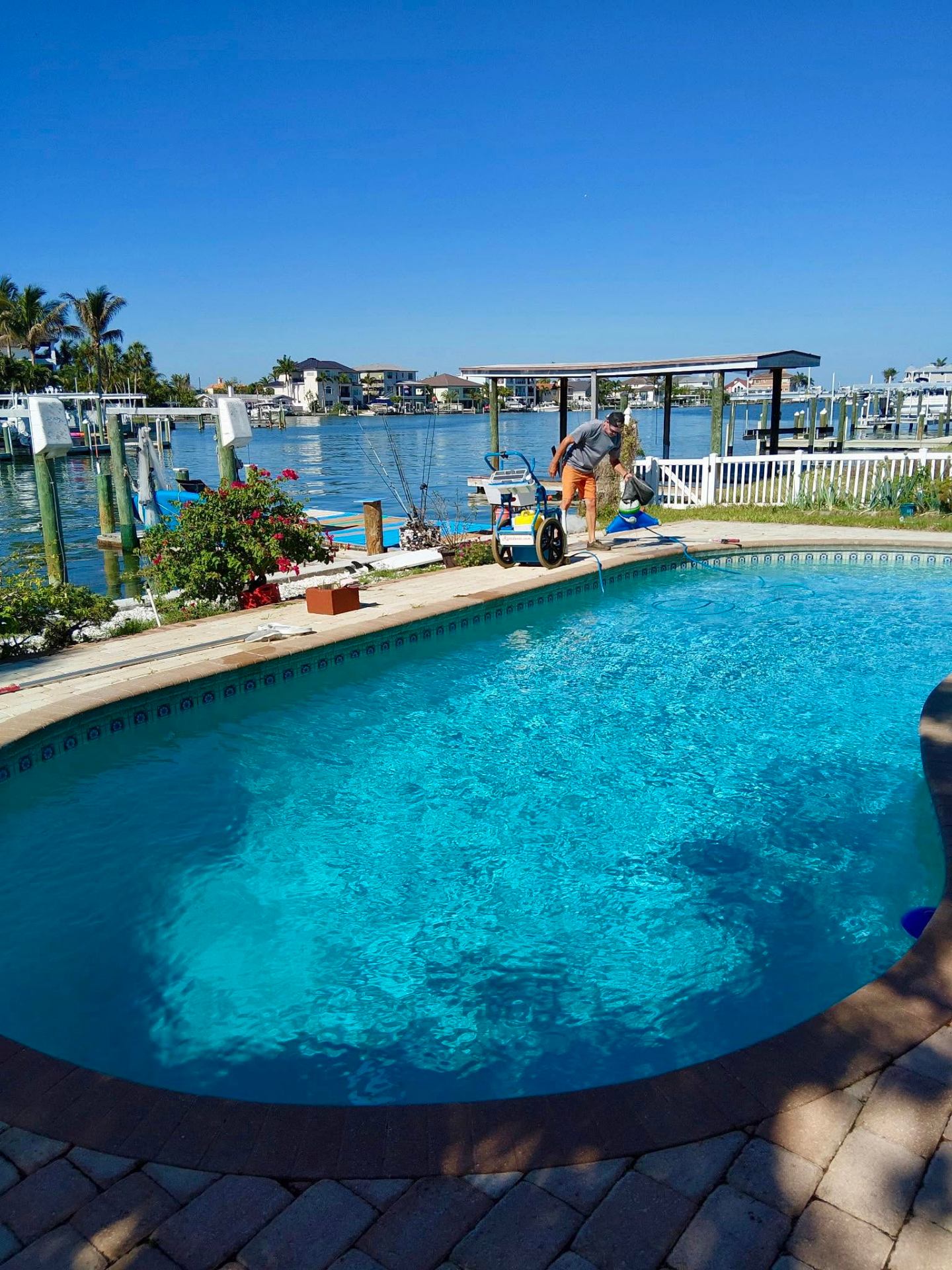
Pinellas County is a peninsula on a peninsula. When a system moves into the Gulf, our pools take wind, rain, and debris all at once. A little preparation saves a lot of recovery work.
Do not drain your pool
This is the big one. Much of Pinellas County sits on a high water table. An empty or low pool can float, shift, or crack from hydrostatic pressure during heavy rain and flooding. The water in your pool is what holds the shell in place. Lower it a foot at most if flooding is forecast, never more.
Before the storm
- Super-chlorinate so the pool has sanitizer reserve for several days without service
- Bring in furniture, toys, and loose planters, but never put them in the pool
- Turn off power to the pump, heater, and salt system at the breaker
- Photograph your equipment pad and pool area for insurance
- Remove and store the pool cleaner and any removable ladder or handrail
After the storm
- Do not restart equipment until the pad is dry and inspected
- Skim heavy debris out by hand before running the pump so you do not clog impellers
- Lower water back to the middle of the skimmer
- Test and rebalance chlorine, pH, and alkalinity, expect to shock
- Clean the filter, storm debris loads it fast
We handle storm recovery locally
Our crews are based here in Pinellas County, so we are on the road as soon as it is safe. Existing weekly customers get priority storm cleanup. If your pool took on debris after a system, call (727) 222-0467.
Eddie Hardwick owns and runs Clear Waters Pool Care, servicing residential and commercial pools across Pinellas County, Florida. He has spent years balancing Gulf-coast pool water through summer storms, pollen season, and snowbird turnovers.